Tuesday, March 18, 2014

Time Consumption (03/21/14)

This week I did some reading in the book, Manage Your Day-To-Day:Build Your Routine Find Your Focus & Sharpen Your Creative Mind.  I took what I thought was good advice and some points that I hope that I will keep in mind throughout my career.

Manage Your Day-To-Day spoke to the distractions that technology has brought into our lives. Although as a 21 year old student I do not get many emails that require an immediate reply, I can relate to the distractions and the time I waste checking my smart phone. Reading and responding to an email or texting someone back and forth is easier than sitting down to the project or the research paper ahead of me. The advice offered in the book is good advice to students as well as professionals. I particularly took away that scheduling time to do my work, (for me, scheduled time at the library) and turning off my phone during this time is the most effective way to getting work done. It is a good habit and I will continue to try to make it a permanent one.

While reading the book I recognize the dilemma technology brings to the workplace. Getting to work and being faced with 85 emails first thing in the morning, for example, sounds very daunting and distracting. For so many years now we have been hearing the expression 24/7.  Fortunately it seems people are beginning to realize that 24/7 is not necessarily a good thing. As Dan Ariely writes in the chapter Understanding our Compulsions “The idea that the best way to communicate with people is 24/7 is not really an idea about maximizing potential.” (p 92) Ariely also writes that checking email first thing in the morning is a bad habit. It is a waste of a very productive and creative time of day. Reading emails and responding to emails should be scheduled into the day. If this became a habit among more professionals it would become an accepted practice and would perhaps increase productivity and creativity.  Truthfully however, as much as I understand the time consumption and the distractions that responding to a large amount of emails cause, there is a part of me that hopes and looks forward to this becoming a problem of mine as well.  Be Careful what you wish for. I know.

My favorite piece of advice I read this week was from Scott Belsky in the chapter “Tuning In To You.” Belsky writes that by turning off the technology and being more present in the “now” you are broadening your chances to come across unexpected opportunities. Belsky writes, “When you tune in to the moment, you begin to recognize the world around you and the true potential of your own mind.” (p111) Personally this is something that I want to work on. I plan to make being present in the world a priority, and hope for and expect some unexpected opportunities to come my way.

Works Cited
Glei, Jocelyn K., ed. Manage Your Day-To-Day Build Your Routine , Find Your Focus & Sharpen Your Creative Mind. Comp. 99 U Behance. Las Vegas: Amazon, 2013. Print.

After my reading I got to work on my projects. I made two different comps for my website. I did not want the sites to appear too busy and at the same time I wanted to bring in some color.


Thursday, March 6, 2014

My Technique (03/07/14)

Like most students, over my years in school I have been developing tools and techniques to help me manage my schoolwork. For me personally I have had the help of teachers and my parents who given me suggestions and advice as to what works for them. What I have learned is that the techniques that work best for me were suggestions that I took from them and made into my own. Tackling the hardest assignment first, going to the library and sitting in a certain area where I am less likely to be distracted and trying my best to ignore my phone’s emails, texts and news alerts are some of my own techniques.  As Mark McGuinness is quoted as saying in Manage Your Day-To Day: Build Your Routine, Find Your Focus & Sharpen Your Creative Mind, “A truly effective routine is always personal-a snug fit with your own talent and inclinations.” p29. With this said, however, I am always interested in what works for others, as I continue to fine tune my techniques.


Working is going to be a very different situation than school work and will most likely require a very different routine. I find interesting in reading, Manage Your Day-To Day, some very different routines of the professionals. I think one of the best pieces of advice is from Seth Godin, who says that habits are important in getting the job done, and that you just have to do it. He writes, “Because lots and lots of people are creative when they feel like it, but you are only going to become a professional if you do it when you don’t feel like it. And the emotional waiver is why this is your work and not your hobby.”p42. Another piece of advice comes from Mark McGuinness, he advises to do creative work first and reactive work or answering emails and phone calls second. He says, “I always get my most important work done--and looking back all my biggest successes have been the result of making this simple change.”p27. He also suggests the use of creative triggers such as the same surroundings and or music. These will be triggers to the brain that it is time to work. An interesting piece of advice comes from Gretchen Rubin who suggests that frequency is an important element for her in getting the job down. She suggests that working on a project every single day is helpful even if it is for a short period of time. Rubin says, “When you work regularly, inspiration strikes regularly.” p35. I find this idea to be interesting because the same argument can be made for taking a break from a project from time to time to renew inspiration. I am reminded of the quote from Mark McGuiness at the beginning of my blog-routine is a personal fit.


After the readings, I decided to do some redesigns for my business cards. Using MOO (http://us.moo.com/) I found some good designs for my cards:


I then started planning the design for my portfolio website:


Sources

Glei, Jocelyn K., ed. Build Your Routine, Find Your Focus, and Sharpen Your Creative Mind. Las Vegas: Amazon, 2013. Print.

Thursday, February 27, 2014

Being a Free Radical (02/28/14)

Now that I am finishing college and looking to start a career I am getting a lot of advice from a lot of different people I know.
The advice goes something like this:
  1. Pick what you love to do and figure out how to make a career doing it.
  2. If you could do anything without the risk of failing, what would you do? Go do that.
  3. Don’t be afraid to fail.

I appreciate the advice, and I understand what they mean by the advice.The problem is I am not sure if it is necessarily the best career advice.
  1. There are many things that I love to do, but I don't know if I will be able to make career out of doing it.
  2. I know failing is a teachable moment but reckless failure can also be very harmful.
  3. Everyone is afraid to fail. Telling someone not to be afraid to fail is easier said than done.

In reading I have come across some advice that I think will be more useful to me. One piece of advice that spoke to me, is that with experience and a lot of practice will come an increase in skill levels that will lead me to new and different paths. Cal Newport, writes in Maximize Your Potential: Grow Your Expertise, Take Bold Risks & Build An Incredible Career, about the author Bill McKibben, who wrote,The End of Nature. Before McKibben went off into the wilderness and wrote his book he worked for many years as a writer. Cal Newport writes that it was because of McKibbens years of writing experience that he was able to cultivate his skills and eventually make his own path. Newport wrote that,“the systematic development of skill (such as McKibben ripping through more than five hundred articles between 1979-and 1987) almost always precedes passion.”p31 Doing, gaining experience and gaining valuable skills should be my priority as I begin my career.

Another piece of advice I have taken is that the world  is very competitive and is ever changing. Keeping that in mind and keeping in mind that I am my best investment, it is good advice to be constantly developing new skills. Robert Safian writes in  Maximize Your Potential: Grow Your Expertise, Take Bold Risks & Build An Incredible Career, “That’s the challenge for businesses, and that’s the challenge for individuals: understanding the point at which you are protecting what you know and defending what you know, instead of looking at what else you can learn and how you can grow.” p48.

In reading Maximize Your Potential: Grow Your Expertise, Take Bold Risks & Build An Incredible Career, I have given some thought to failing. Although I admitted earlier that I am afraid to fail, I think it is important to say that I find to fail intentionally or recklessly is scary. I have failed in the past and I know I have survived just fine and have undoubtedly learned from these failures. I know I will fail again, and will survive  and learn again. I think however in a career, one should  consider the consequences of their actions and decide if these possible consequences are worth the risk of failing.  Sometimes that answer will be no but many times that answer may be yes. It is a calculated risk of failing. Ben Casnocha advises in,  Maximize Your Potential: Grow Your Expertise, Take Bold Risks & Build An Incredible Career, to take intelligent risks. He wrote, “Because the flip side of every opportunity is risk, if you’re not taking risks, you’re not finding the breakout opportunities you are looking for.” 41

Advice I plan to keep in mind:
  1. If you keep doing, keep gaining experience and keep sharpening your skills, you will love what you do and you will make a career doing it.
  2. Remember you are your best investment. Keep growing by learning new skills.
  3. Don’t be afraid to take “intelligent risks” to find opportunities.

Sources

Glei, Jocelyn K., ed. Grow Your Expertise, Take Bold Risks & Build An Incredible Career. Las Vegas: Amazon, 2013. Print.

Thursday, February 20, 2014

Mapping My Online Portfolio (02/20/14)

In my Game Art course this semester I am rendering a 3D model of a room. I like working with the Maya program and am looking forward to doing some more animations with it. This led me to the Graphic Artist Guild Handbook to research careers in video game art, I have learned that there are many, including animator, which interests me. Unfortunately, I have also learned that outsourcing has diminished some opportunities in the United States. Graphic Artist Guild Handbook, states, “Art can easily be created and refined outside the main studio, so it’s easy for companies to send art-based work overseas, where labor is cheaper.” (pg. 206) To increase an video game artists opportunities it is important to have technical knowledge in programming and to keep up with the ever changing technology as well as have artistic talent.


I remind myself to concentrate on my portfolio.
My first task to to redesign my business cards, letterhead and envelopes. I feel that I have a better handle on what design I am looking for. I have designed a much simpler, cleaner looking brand. I decided to use black and red as my colors and I am happy with my designs.


Today I am going to develop the information architect for my website. My online portfolio will be seen by a lot more people than my portfolio book. A lot of thought and planning needs to be put into it.  It needs to show off my work while being easy to navigate.  Larry Volk and Danielle Currier states in No Plastic Sleeves, “It’s guaranteed to be impressive if all the components of your portfolio are designed with the same conceptual and visual brand in mind.” (pg. 146) This brings me back to my brand board. My brand board keeps me focused on the look I want to achieve. Research says to keep the portfolio simple, clear, consistent, memorable and confident.


Designing the information architecture took more time and effort that I originally thought. In No Plastic Sleeves, the authors advise, “Consider how your website portfolio will be used. What kinds of functionality (means for someone to navigate and experience the website) will be included?” (pg. 149)


Sources
Graphic Artists Guild Handbook Pricing and Ethical Guidelines. 14th ed. New York: Graphic Artists Guild, 2013. Print.

Volk, Larry, and Danielle Currier. The Complete Portfolio Guide for Photographers and Designers. New York: Focal, 2010. Print.

Thursday, February 13, 2014

Here's My Card (02/13/14)

This week I had a few things to get started on towards creating my portfolio.
I am becoming more and more aware of just how essential my portfolio is. It will be a way for me to market myself in a competitive world.

I have to begin to organize and collect all the work I have created. As I look my work over I know that I will need to tweak or to re-do some pieces.  But before I consider that, I need to decide exactly what direction I would like to go in. What story will I like to tell, and who do I want to tell my story to? From my readings in No Plastic Sleeves, I have found out that somewhere around 12 pieces of work seems to be a good number for my portfolio. Quality is more important than quantity and that although all pieces must be good, it is advisable to lead with and to end with my best pieces. No Plastic Sleeves also emphasis the importance the process book is in helping to convey my thought process. By showing my potential employer my process, I am able to present a better picture of who I am. I will keep all of this in mind when deciding on my pieces.

But first I need to decide what my identity design would be. What is my brand?  I know that I would like to do animation. It is what I enjoy the most and what I am most proud of.  In reading The Graphic Artists Guild Handbook, I am reminded of all the areas that an animator can work. Animation companies, the movie industry and the gaming industry are just a few places an animator can find work. That is good news. The not so good news is, the industry is very competitive. It is a desirable and popular profession and many U. S. companies hire outside the country.This is more reason why I need to do a good job in conveying my brand in my portfolio.

How do I tell a story about who I am as a creative professional? That is not easy. No Plastic Sleeves gave a few exercises that are helpful in this. I started with listing 5 words to describe myself.  dedicated, patient, detail oriented, considerate, gamer.
Then I tried the brand statement. “I am an animator with strong skills with Adobe Flash and Maya who is dedicated, thorough and detail oriented. I have a strong belief that animation has infinite possibilities.”

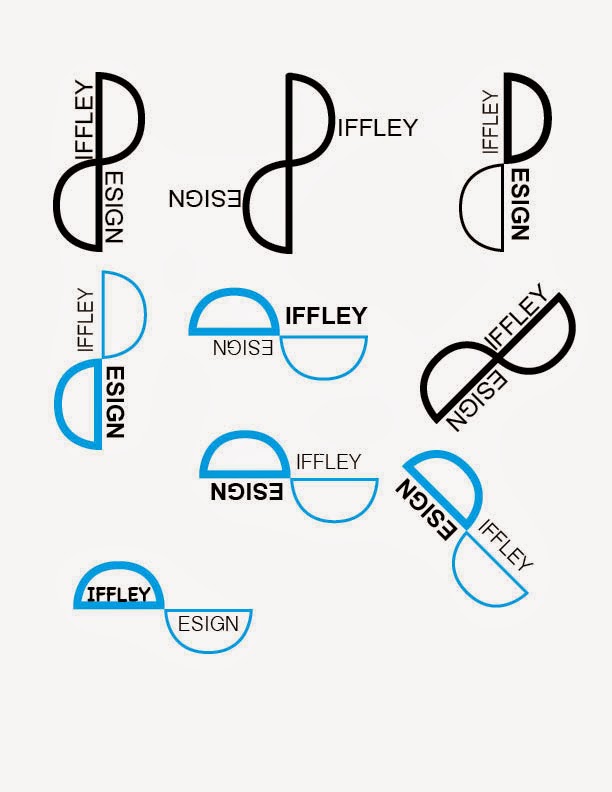
My logo is an infinity sign shaped like a D for my last name. I believe that there are an infinite amount of ideas. Some ideas on based on others but can be developed and created into whole new ideas. Now it is time to design a business card, letterhead and envelopes using my logo.

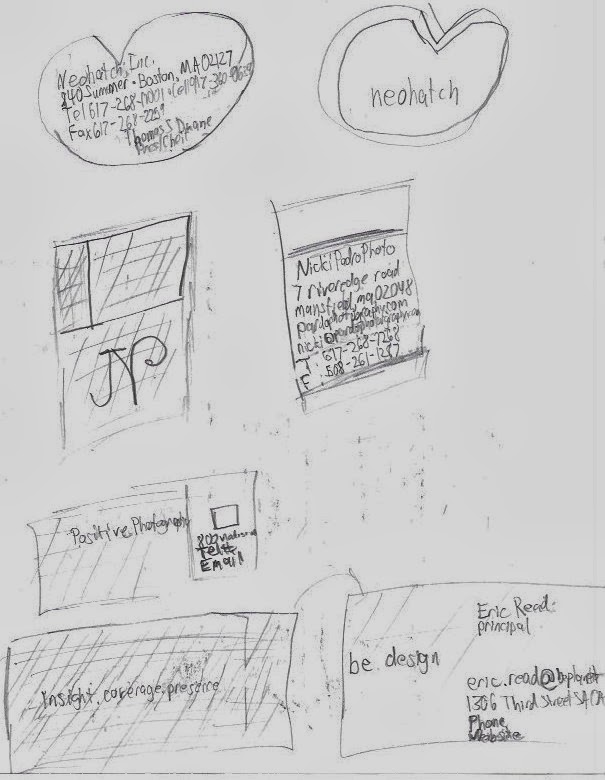
In looking for inspiration for business cards, I came across the February 4, 2014, Wall Street Journal article, “The Business Card Cannot Be Killed”, by Joanna Stern. I recommend this article because it talked about the different apps being developed to scan the business card. It was at first surprising to me that the business card is not obsolete in today’s day and age of technology. It seems however according to Stern’s article that the technology is not quite there yet. But as I thought more about the business card I see the importance of having it in your hands. The visual image of the card can quickly bring up an image of the person. To get more research I looked at the book, The Best of Business Card Design 6: No. 6 by Blackcoffee Design, Inc. The book states, “In this digital age of laptop, cellular phones and PDAs the business card has ironically proliferated. The more memorable the card the more memorable the contact.” p.6. The book gives 400 examples of cards that communicates information in a legible manner. It based its criteria on functionality, communication and wow factor.

Here I sketched a few of my favorites.


Time to start designing my own. Here are some business cards, letterheads and envelopes.

Sketches:


Business Cards:


 Envelopes:


 Stationaries:


Sources
Blackcoffee Designs Inc, comp. The Best of Business Card Design 6:No.6. Gloucester: Rockport, 2004. Print.
Graphic Artists Guild Handbook Pricing and Ethical Guidelines. 14th ed. New York: Graphic Artists Guild, 2013. Print.
Stern, Joanna. “The Business Card Cannot Be Killed.” The Wall Street Journal. N.p., 4 Feb. 2014. Web. 8 Feb. 2014.

Volk, Larry, and Danielle Currier. The Complete Portfolio Guide for Photographers and Designers. New York: Focal, 2010. Print.

Wednesday, February 5, 2014

Back to the Sketch Pad

After Friday’s class critique I have gone back to the sketch pad. But first I checked out Pinterest again for inspiration:

http://www.pinterest.com/jfdiffley/logos/

I also read David Airey’s blog. Graphic Designer David Airey gave ten steps to creating a logo. Essentially all of them was to sketch and sketch some more. His advise was not to be concerned about mistakes and to understand that can take many misses in order to get a hit. I drew encouragement from his words of advise.


I also read David Airey’s blog on his own personal logo project. Airey sketched over a hundred personal logo designs before he hit upon one he liked. I found his advise and his own experiences encouraging as I struggled with my own personal logo designs.


Here are just a few of David Airey’s sketches.


As I sketched, I asked myself about design and about myself. I stopped worrying about ideas that were done before or seemed too cliche, I just kept sketching.
Here are some of my ideas:


I tried a few comps just to see how they looked:


Sources
Airey, David. “Personal Logo Sketches.” David Airey. N.p., 7 May 2007. Web. 2 Feb. 2014.

- - -. “10 Steps to Great Logo Design.” David Airey. N.p., 29 July 2007. Web. 2 Feb. 2014.

Mind Mapping:

After Friday’s class critique, I had some work to do on my Mind Map. Instead of listing what programmed I used for the projects, Professor Hastings suggested I list my projects under what type of project they were. For example all my game designs would be listed under Game Development Design.

Everything looks clearer to me: